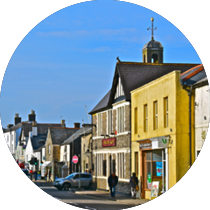

Now a vibrant district in Cardiff, Pontcanna began as a peaceful rural area. As recently as the late 19th century, what we now know as Pontcanna was almost entirely open farmland. Its transformation from rural fields into a leafy, affluent neighbourhood is a story of gradual urban development shaped by history, culture, and resilience.
The name Pontcanna derives from “Canna Bridge”, referencing both a nearby farm and a set of cottages that stood in the area before it began to develop its own distinct identity. As Cardiff expanded during the Victorian era, Pontcanna evolved into a suburb characterised by elegant terraced houses, wide streets, and green spaces that continue to define it today.
Pontcanna began to take shape as a distinct urban area in the late 19th century, as Cardiff’s rapid industrial growth led to increased demand for housing beyond the crowded city centre. Wealthier residents were drawn to the area’s spacious plots and proximity to both the city and the open green spaces of Llandaff Fields and Bute Park. By the early 20th century, Pontcanna had developed a strong residential identity, with its grand Victorian villas and tree-lined avenues attracting professionals and middle-class families. Though never a town in the official sense, Pontcanna gradually grew into a self-contained neighbourhood with its own shops, places of worship, and community institutions.
One significant landmark in Pontcanna’s history was the Sophia Gardens Pavilion, built in 1951. For decades, it served as a popular venue for dances, public gatherings, and exhibitions, reflecting the post-war optimism of the time. Sadly, the pavilion met an abrupt end in 1982 when it collapsed under the weight of heavy snow. Its loss marked the end of an era for the community.
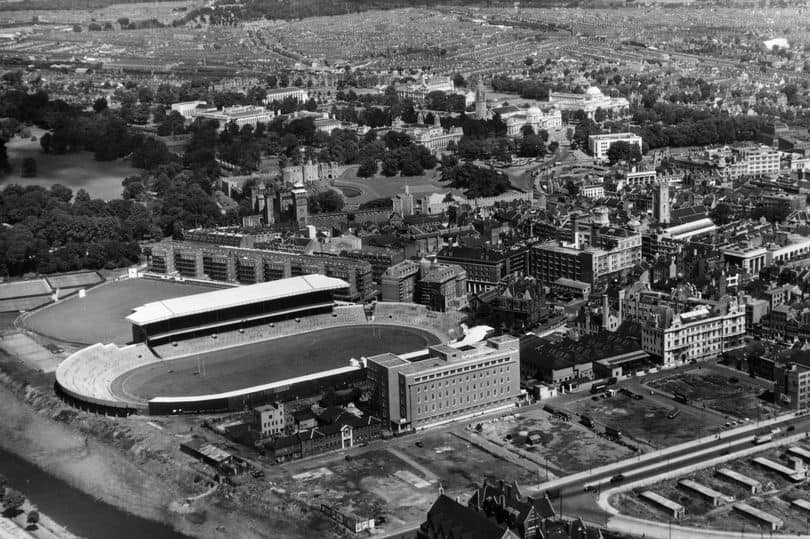
Pontcanna’s history is also shaped by its near-miss during World War II. On January 2, 1941, Cardiff suffered one of the most devastating air raids of the war. Neighbouring Riverside was hit particularly hard, with many homes damaged or destroyed and Blackstone Street completely flattened. In contrast, Pontcanna was largely spared, escaping with minimal damage. This fortunate twist of fate allowed much of its architectural heritage to remain intact.
Today, Pontcanna is known for its creative spirit, independent cafes, and thriving community. Its rich past, from farmland to fashionable suburb, still resonates through its buildings and streets, making it one of Cardiff’s most distinctive and sought-after areas.
Photo credit: Wales Online