
Before Cowbridge became the vibrant and lively town we know today, it was a Roman settlement established in the 1st century AD. Archaeological discoveries over the years have confirmed this, with remains of Roman structures – such as houses and shops – found particularly in areas like Coopers Lane. One particularly fascinating aspect of Cowbridge’s Roman past is the ongoing debate surrounding the location of the fort of Bovium, mentioned in the Antonine Itinerary, a Roman document that listed settlements and road networks across Britain. Some believe Cowbridge could be the elusive Bovium itself, adding an air of mystery to the town’s ancient roots.
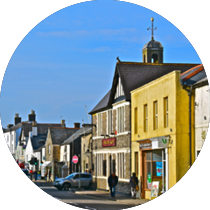
Over time, Cowbridge evolved into a prosperous medieval town, becoming a key market and trading centre in the Vale of Glamorgan. Merchants and skilled craftsmen were drawn to the area, helping the town flourish economically and socially. The narrow streets and layout of the town centre still reflect its medieval origins, with some buildings dating back several centuries. The town’s name in Welsh, Y Bont-Faen, meaning “the stone bridge”, hints at both its practical infrastructure and its important as a crossing and connection point.
Cowbridge’s strategic location, while beneficial for trade, also made it vulnerable during periods of unrest. During the Gyndŵr Rising in the early 15th century, the town suffered attacks from Welsh rebel leader Owain Glyndŵr. In 1403, the nearby Battle of Stalling Down saw Glyndŵr’s allied French and Welsh forces clash with an English army loyal to King Henry IV. While the details of the battle remain the subject of historical debate, it is clear that Cowbridge’s role in this turbulent period of Welsh history was significant.
In centuries that followed, Cowbridge continued to grow and modernise, yet it has retained its historic charm. From its Roman foundations to its medieval market town heritage and role in Welsh resistance, Cowbridge remains a place where layers of history sit just beneath the surface.