
From ancient settlers and Norman knights to pirate legends and wartime resilience, Penarth’s past is anything but ordinary. There is evidence of human inhabitation going back at least 5000 years, however, the oldest reference to ‘Penarth’ goes back around 1000 years to when Osbert, a Norman knight granted land here to St Augustine’s Abbey in Bristol. During the reign of Henry VII, he took possession over the land, which was then given to the Bristol Cathedral and was then leased out in turn to three local families, the Herberts, Lewises and Windsors. Evidence of these families can still be seen throughout the town today.
A Centre of Villainy
The following centuries saw a heavy increase in piracy and smuggling in Penarth and it was believed that many leading families were implicated. The port allowed the town to thrive but it also left a space open for pirates and smugglers, and the locals were only too happy to receive their ill-gotten goods.
A well known smuggler and pirate, Edward Edwards, lived at the Penarth Head Inn (which was later replaced by the Custom House in 1865) in the 1700s. He was a notorious figure in the town and was known for hiding smuggled goods in his cellars and regularly standing against the authorises. His actions contributed heavily to the town’s reputation as a ‘centre of villainy’.
During the reign of Queen Elizabeth I, the town was described as being a ‘foul nest of pirates and outlaws’. It got so bad at one point that a Special Commission was set up to investigate and suppress it. The Queen appointed deputies of the law – namely Sir E. Stradling, E. Mansell and J. Matthews – who put together an enforcement of soldiers to help stamp out the problem. Their tactics were known to be brutal, such as burning down homes, killing livestock and even threatening to execute anyone involved in piracy. This caused fear amongst the local residents and eventually the pirates and smugglers found somewhere else to do business.
The Garden by the Sea
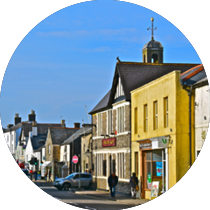
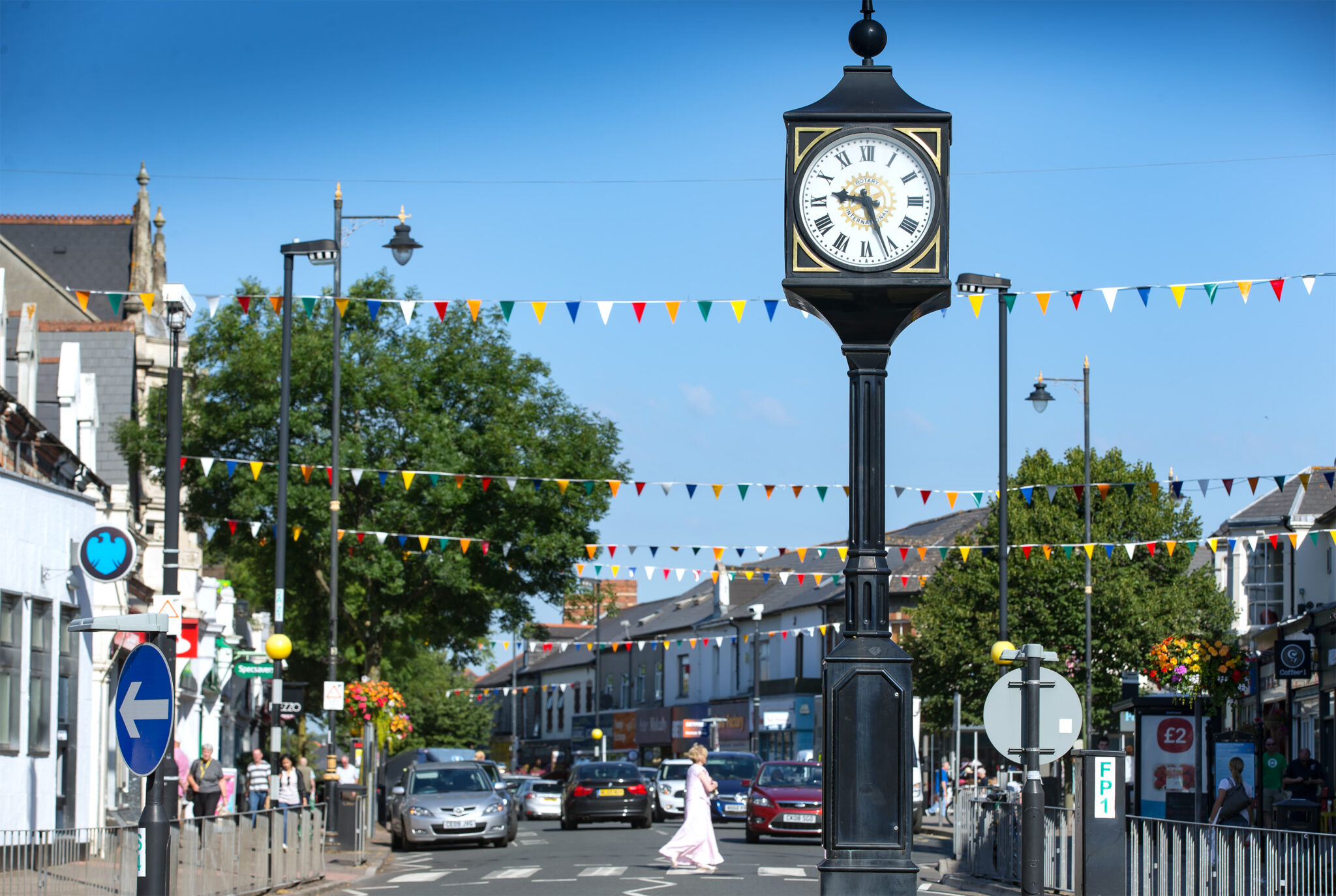
The town changed a lot during the Victoria era. What is now our bustling high street used to be residential housing but then the owners started converting their front gardens into shop extensions but you can still see a lot of the original architecture on Windsor Road. And this is where our town’s namesake ‘The Garden by the Sea’ comes from.
And with the growing popularity of Penarth beach, our excellent ports and the increased communication with Cardiff, the town thrived.
A Town at War
Despite the many advantages the docks provided for the town, it did make Penarth a target during war times and during World War II, the town became a target for Nazi German bombing raids which led to Penarth having its own Home Guard detachment.
Scrap metal was often needed to build tanks, aircrafts and artillery, so at the height of the war many Penarth home owners lost their traditional Victorian iron railings from their front gardens. There are few of the original railings left in Penarth now. And during food rationing, parks, recreation grounds, resident’s gardens and any other open spaces were converted into allotments to grow vegetables. And at the top of Windsor Arcade, a non-profit restaurant sold three-course meals for ninepence for families made homeless by the bombing or had run out of rations coupons.
During the Dunkirk evacuation in 1940, many members of the Penarth Yacht club volunteered to help and sailed their yachts and motor boats across the English Channel to France.
From its ancient roots and turbulent tales of piracy to the proud civic spirit shown during wartime, the town’s history runs deep and you can still see that in Penarth’s architecture, community spirit and thriving local high street.