

Roath, one of Cardiff’s most characterful districts, blends historical depth with natural beauty and urban charm. Its transformation from marshy farmland into a vibrant part of the Welsh capital is a story shaped by nobles, navigators, and the needs of a growing city.
Roath’s roots stretch back to the 11th century, when Norman lord, Robert Fitzhammon, a kinsman of William the Conqueror, chose Cardiff Castle as his stronghold. While he gifted much of Glamorgan to his followers, he kept Roath for himself, establishing Roath Manor as a “home farm” to supply food for his extensive household. The manor once stood on the site now occupied by Roath Court Funeral Home.
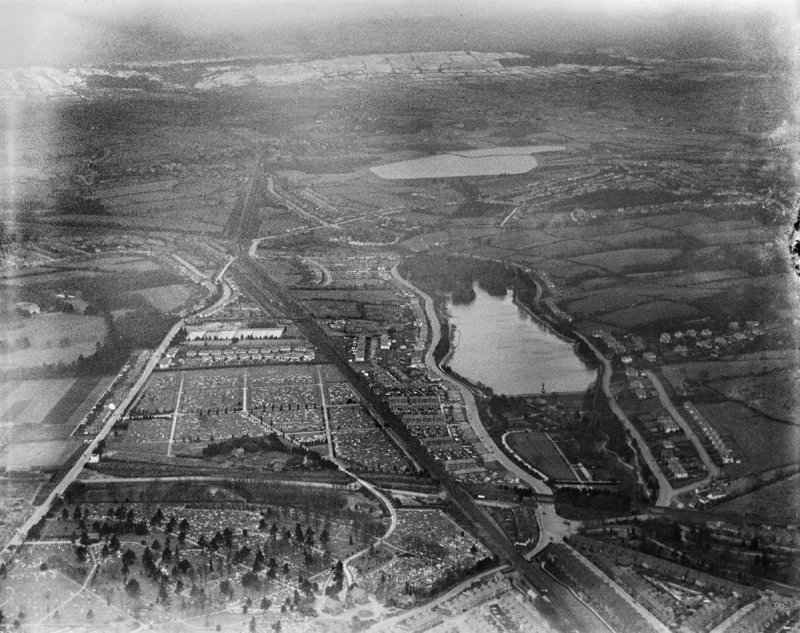
By 1841, the area had grown into a modest village of about 80 residents, clustered near the parish church of St Margaret’s at the junction of what are now Newport Road and Albany Road. It should be noted that the church you see at this location today is not the original, which was completely demolished in 1868 to make way for a replacement. These early beginnings laid the groundwork for Roath’s future as a key residential and cultural district.
The Industrial Revolution brought rapid change to Cardiff, transforming it into a world-leading port. With urban expansion came a need for open, green spaces. In response, John Crichton-Stuart, the 3rd Marquess of Bute gifted 103 acres of marshland to the town in 1887, on the condition that surrounding landowners also contribute. Lord Tredegar donated five acres, and local figures Clark, Morgan, and Jackson added 13 more.
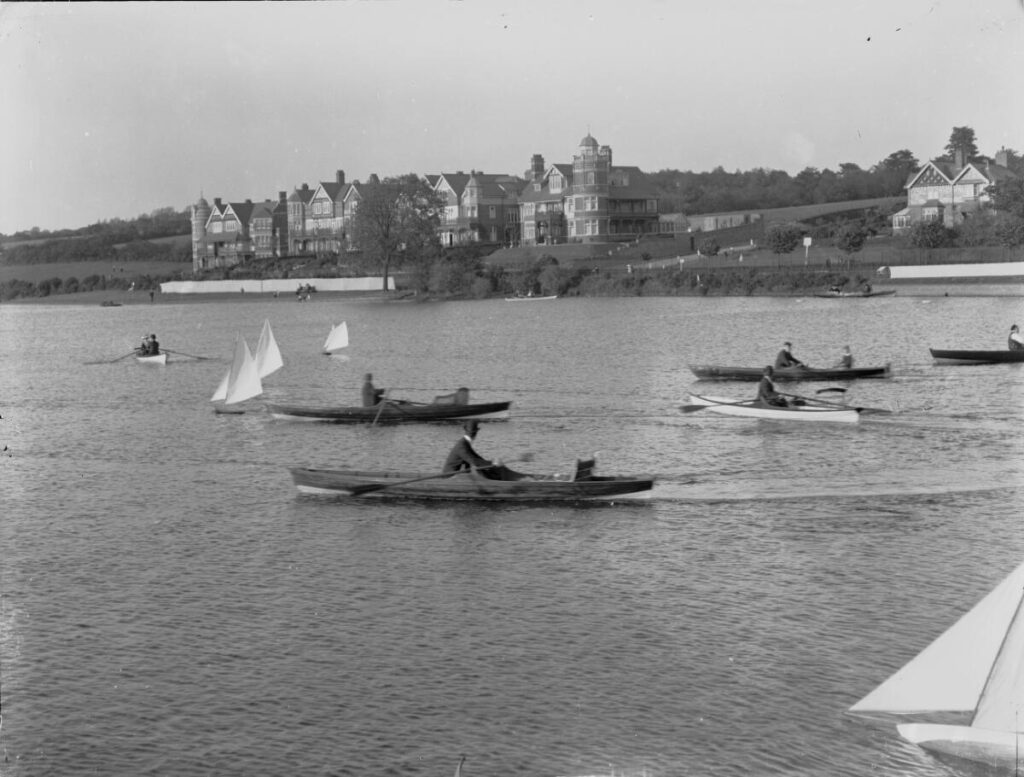
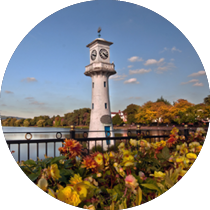
A dam built across the Nant Fawr stream created what is now Roath Park Lake, an iconic feature still loved by both residents and visitors. It was the first publicly-owned park in Cardiff, and part of the Victorian movement to create green spaces for the public, and its design remains true to its origins. In 1915, a model lighthouse was installed at the lake’s edge to commemorate Captain Robert Falcon Scott’s ill-fated Antarctic expedition, which set out from Cardiff in 1910. The lighthouse has inspired countless postcards and childhood memories. Many recall feeding the swans and ducks as children, later returning to do the same with their own families.
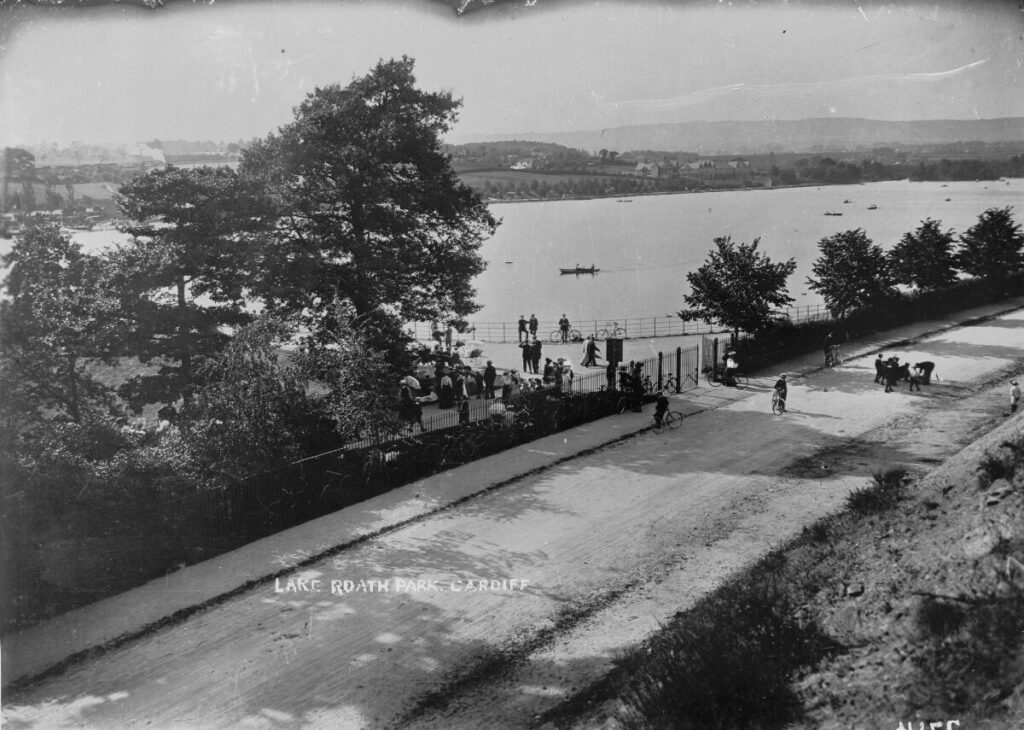
Today, Roath remains a vibrant community, blending its layered history with a lively, multicultural atmosphere.
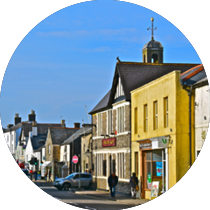
No visit is complete without a stroll down Wellfield Road. A street with a pulse of its own, it has long been the heart of Roath’s shopping and café culture. Decades ago, it was a mix of family-run shops, butchers, and haberdasheries – some of which have stood the test of time, their shopfronts still secretly hiding hand-painted lettering, as soon as the modern fascias are removed for renovation.
Roath’s Victorian homes, bustling high streets, and beloved green spaces continue to tell the story of a district shaped by generosity, resilience, and a deep connection to Cardiff’s past. So, take a walk by the lake, and pause for a coffee on Wellfield Road. You’ll find that some places never really change, and that’s exactly what makes them so special.
Do you have fond memories of Roath Park you’d like to share? Send them to roathpark@viewpublishing.co.uk