

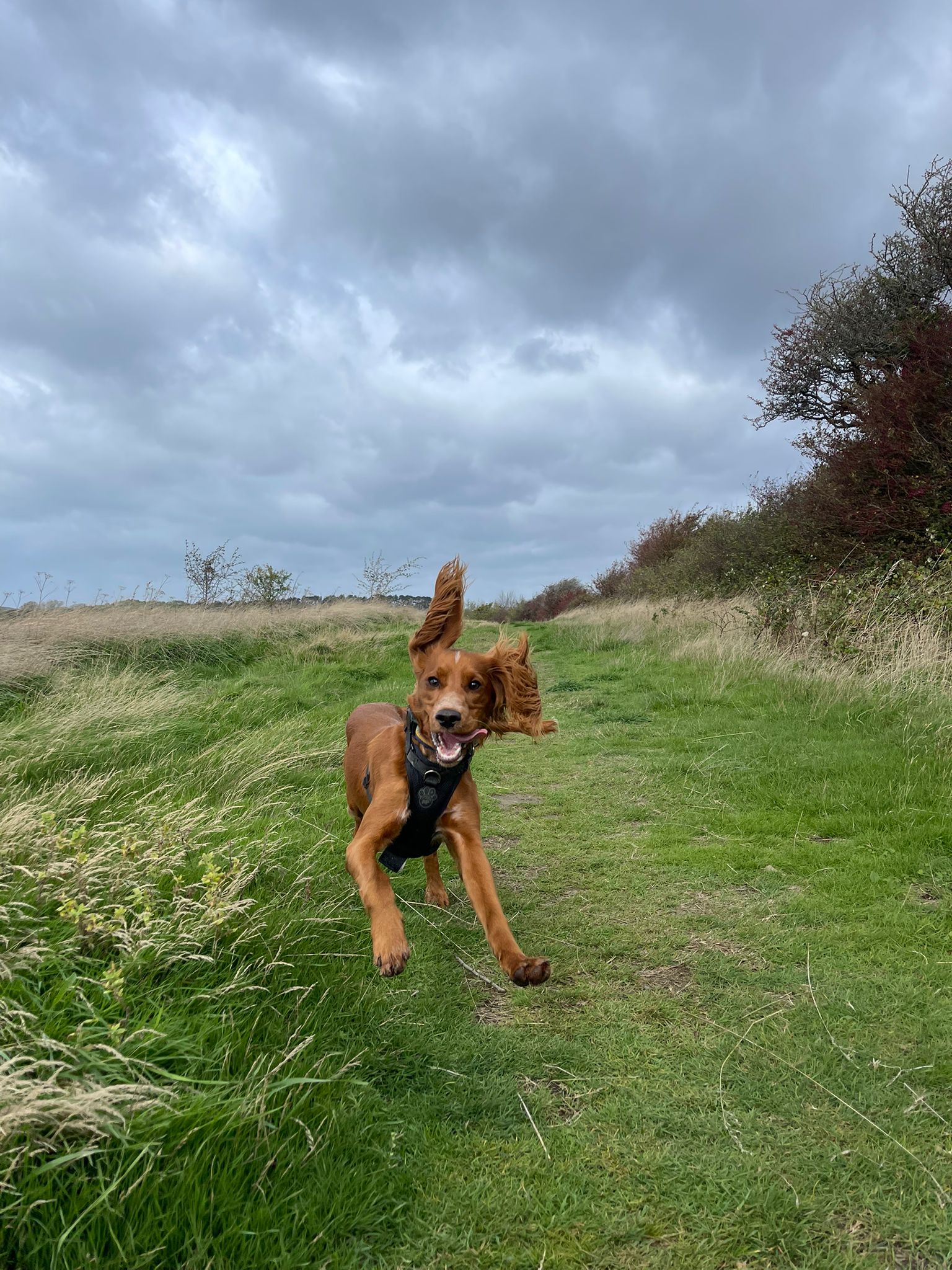
“My dog won’t come back.”
It’s probably the most common reason people get in touch with me. And in most cases, there isn’t any great mystery behind it.
Dogs don’t develop poor recall because they’re stubborn or naughty. More often, recall has quietly become unrewarding – or even something to avoid.
For many dogs, recall is only used at the end of something enjoyable, like when they’re called back when it’s time to leave the park. Dogs are excellent pattern-spotters, and they learn very quickly that “come” signals the end of fun. Delaying, ignoring or dodging recall then makes perfect sense from their point of view.
With my own dogs, the vast majority of recalls are just for fun. They come back, are rewarded with praise, food or a game, and are then sent straight back to what they were doing. That way, recall doesn’t end the walk – it becomes part of it. Coming back predicts good things, not disappointment.
Recall is also a reflection of the relationship we have with our dogs. Dogs move towards whatever they find most valuable in that moment. If the environment consistently offers more than their owner does – smells, other dogs, prey – then that’s where the dog will choose to be.
This is why shouting, repeating cues or chasing after a dog rarely helps. Getting louder doesn’t make you more valuable. And chasing or grabbing at a dog often turns recall into an accidental game, reinforcing the very behaviour owners are trying to stop.
It’s also easy to make recall worse without realising. Dogs with weak recall are often taken to enclosed parks or fields and allowed to run freely. While this feels safe, it often gives the dog long periods to practise ignoring recall and staying disengaged. This simply embeds the behaviour.
Good recall isn’t about control. It’s about creating enough value in coming back that the dog wants to choose it.
If recalls feels unreliable or stressful, it doesn’t mean you’ve failed. In most cases, once owners understand the pattern, recall improves surprisingly quickly.
Penarth Dog Training helps owners understand and work with their dogs’ natural instincts – using kind, modern, and games-based methods.